CHALLENGE 06 • MEASURE & COMPARE
Measure real performance to understand what actually works.
The demonstrator should not only showcase solutions: it should produce data. Temperature, humidity, air quality, energy, water, comfort and maintenance will be monitored to compare the tested systems objectively.
Technical measurements will be compared with occupant feedback to document the real performance of each unit, material and bioclimatic strategy.
MEASUREMENTS & DATA TO TEST
Instrumentation of an experimental mini-villa
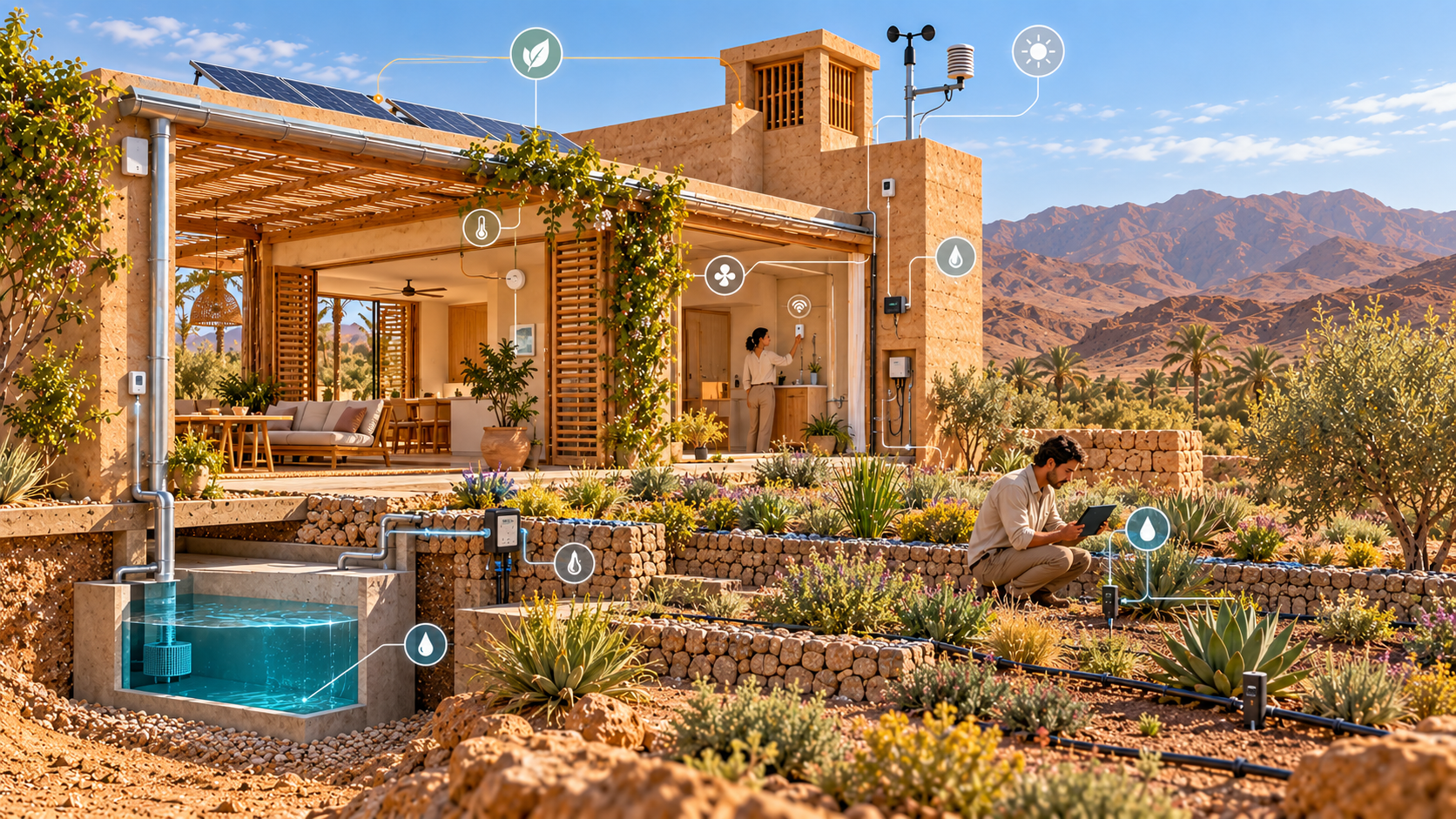
Concept illustration of an instrumented unit equipped with temperature, humidity, air-quality, energy and water-use sensors to monitor performance under real conditions.
Full-scale demonstrator comparison dashboard
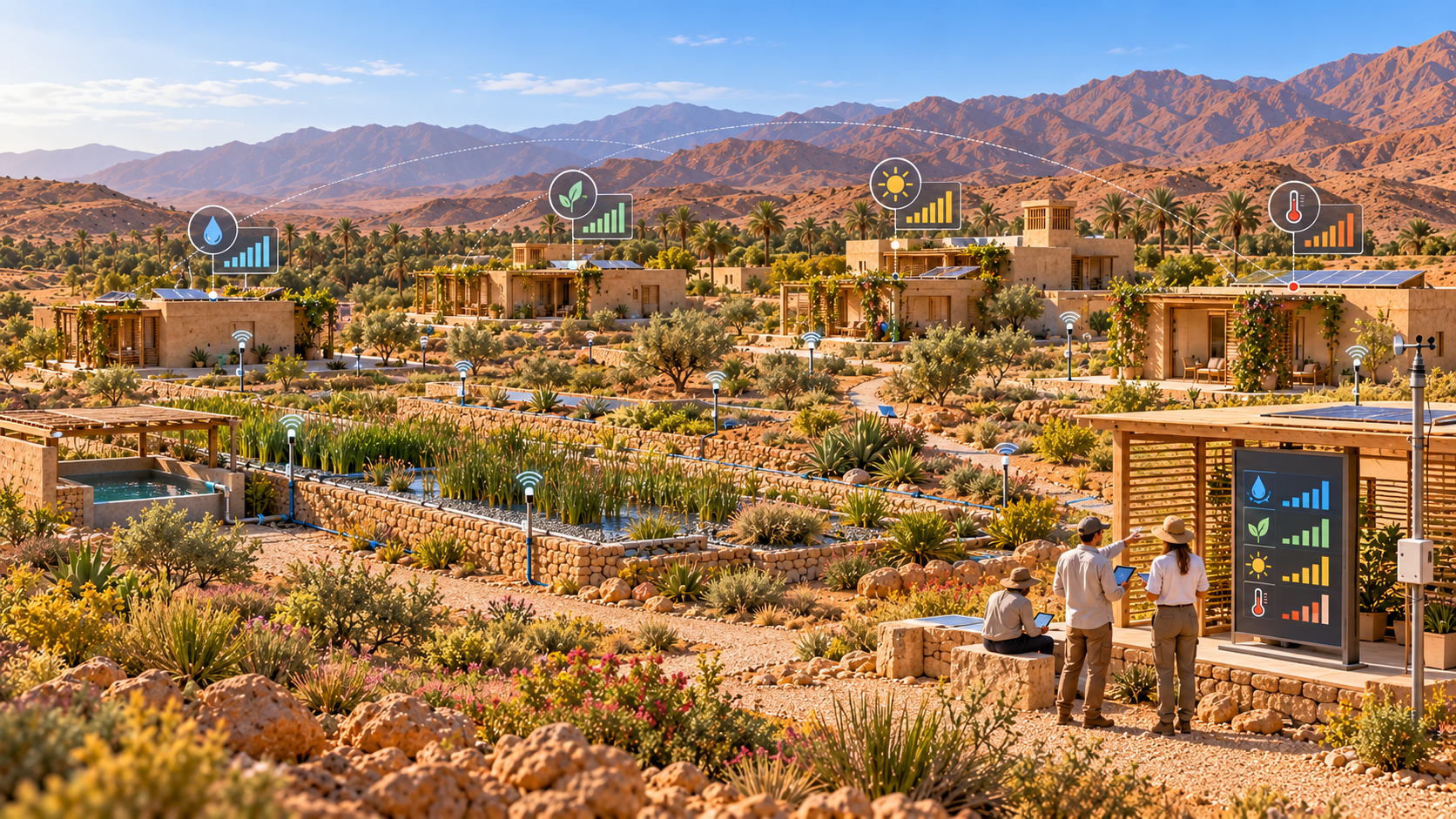
Concept illustration of a comparison system bringing together technical measurements, resource use, occupant comfort and maintenance data across several demonstrator units.
WHY MEASURE?
Compare solutions using data, not impressions alone.
A solution may appear effective without performing equally well under all conditions. Instrumentation will reveal differences between theory, measured performance and real use.
The results can help improve prototypes, guide future choices and produce useful field feedback for partners, researchers, public authorities and project leaders.
Indicators monitored
• Indoor and outdoor temperature
• Humidity
• Air quality
• Air speed and air-change rate
• Energy use
• Water use
• Surface temperature
• Occupant comfort
• Maintenance and incidents
TOOLS & METHODS TO TEST
Build a database of the demonstrator’s real-world performance.
Tools must remain reliable, understandable, maintainable and suited to long-term use. The objective is not to multiply sensors, but to produce useful and comparable data.
Climate sensors
Measure temperature, humidity, solar radiation, wind speed and other parameters relevant to comfort analysis.
Energy monitoring
Measure solar generation, electricity use and any cooling or ventilation requirements.
Water monitoring
Measure water use by end use, volumes collected, treated and reused, and irrigation requirements.
Air quality intérieur
Monitor CO₂, particles, humidity and other relevant indicators in occupied spaces.
Occupant comfort
Collect structured feedback on perceived heat, air quality, noise, lighting and ease of use.
Maintenance & ageing
Document failures, repairs, cleaning, material durability and maintenance time.
Prototype comparison
Compare several units using a common method to identify the advantages, limitations and trade-offs of each solution.
Data & knowledge sharing
Structure results as fact sheets, tables, field feedback and publications accessible to partners.
RESEARCH & DEVELOPMENT
Make the site an experimentation platform open to partners.
The data may be used to improve solutions, launch new trials and build collaborations with universities, laboratories, engineering schools, consultancies, companies and manufacturers.
The demonstrator can host short- or long-term measurement campaigns as well as specific protocols proposed by partners.
Partners & Funders Wanted
We are looking for partners able to provide sensors, instrumentation, data platforms, scientific expertise or funding to build a robust monitoring programme.