WATER HERITAGE • KHETTARAS, FOUNTAINS & OASES
Rehabilitate historic water systems to preserve living heritage and strengthen resilience.
In many arid territories, khettaras, fountains, channels, basins, springs and traditional water points have been abandoned, silted up, damaged or no longer function correctly because of drought and lack of maintenance.
Oasis Terre et Eau aims to document, restore and, where technically feasible, bring these historic systems back into use by combining local know-how, hydrological diagnosis and resource-efficient contemporary solutions.
WATER HERITAGE TO REHABILITATE
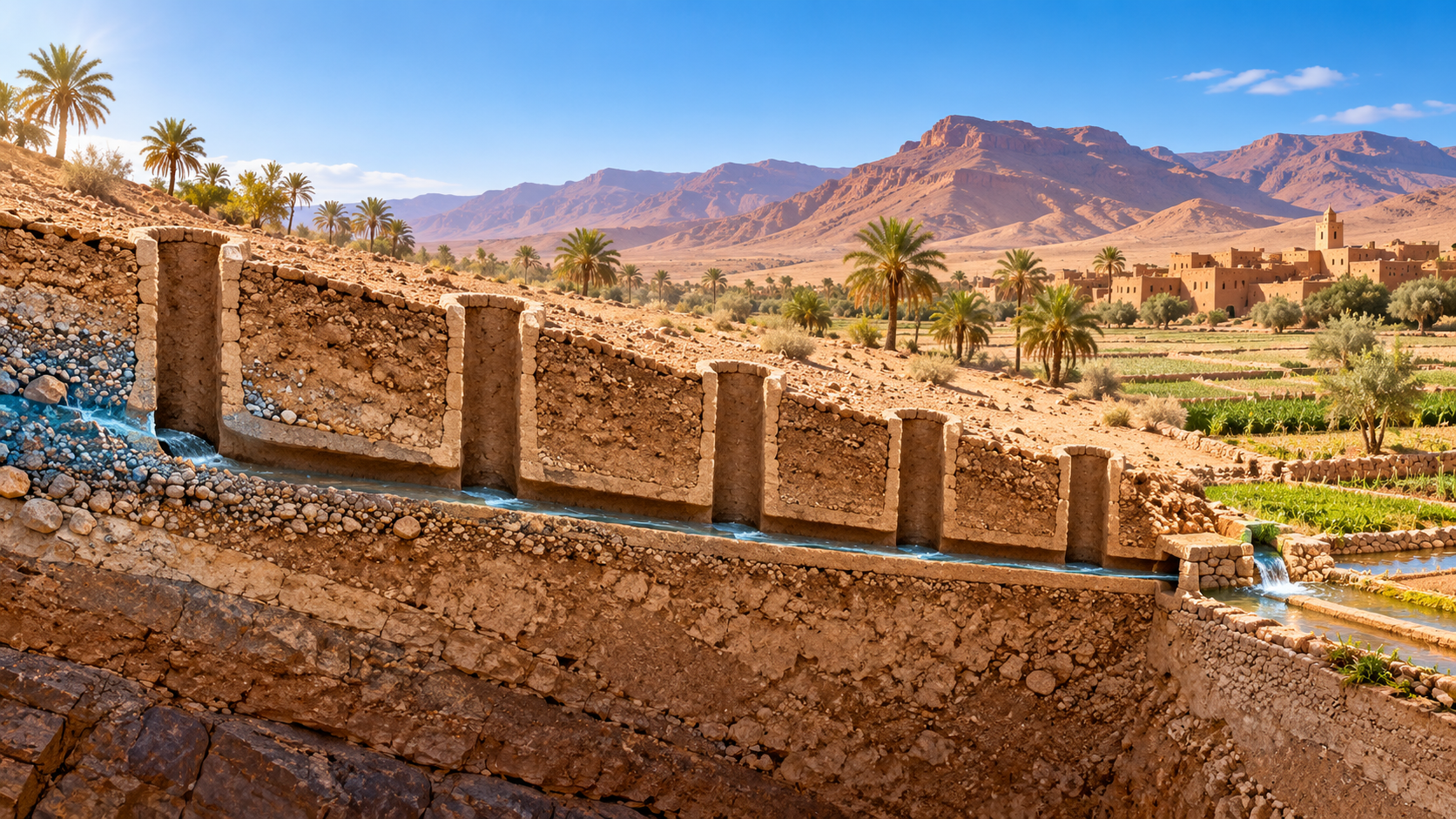
Khettara & traditional drainage gallery
Concept illustration of a khettara: a gently sloping underground gallery with successive access shafts, gravity-fed water capture and conveyance towards inhabited or agricultural areas.
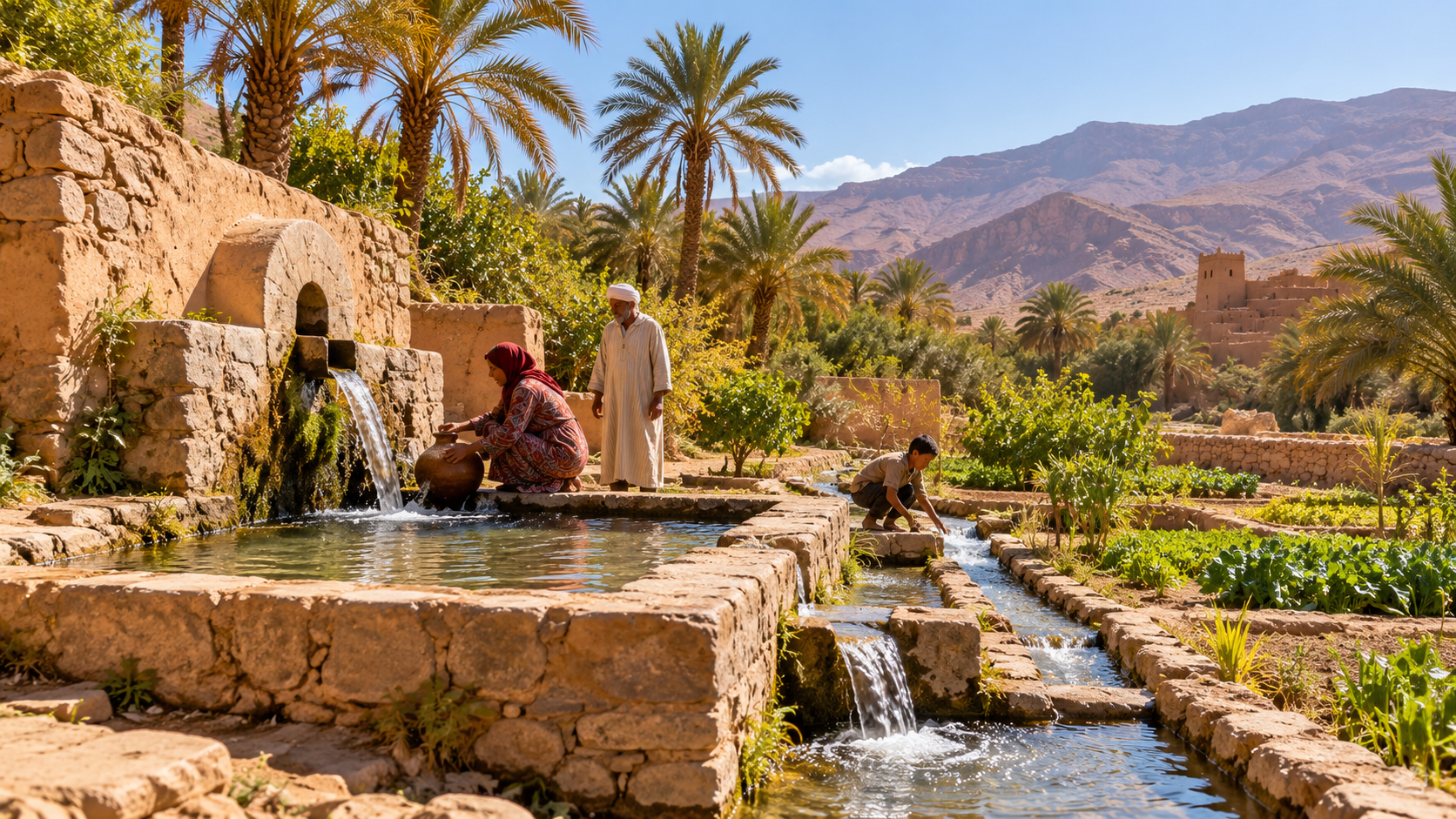
Restored fountain, basin & oasis
Concept illustration of a restored traditional water point with fountain, basin, efficient channels, oasis vegetation and community-use spaces brought back into service.
WHY THIS CHALLENGE?
Restore water heritage without exhausting the resource.
Restoring a historic system must begin with understanding how it works, its condition and the available resource. Structures should not be blindly reactivated if the aquifer or spring can no longer sustain them.
The programme may combine heritage conservation, hydrology, community maintenance, loss reduction and adaptation to changing climate conditions.
Measurable objectives
• Flow before / after
• Losses through infiltration or leakage
• Water quality
• Condition of galleries and channels
• Recharge and resource availability
• Maintenance requirements
• Uses served
• Impact on the oasis and vegetation
SOLUTIONS TO TEST
Diagnose, restore and return systems to use where the resource allows.
Each intervention must respect the system’s historic operation, people’s safety, actual water availability and local community needs.
Hydrological diagnosis
Understand origin, flow, recharge, seasonality and resource trends before any return to service.
Khettaras & galleries
Inspect, secure, desilt and restore drainage galleries and their access shafts.
Channels & seguias
Repair channels, reduce losses and preserve traditional allocation systems where they remain relevant.
Fountains & water points
Rehabilitate fountains, springs, basins and shared-use equipment using simple and maintainable solutions.
Desilting & cleaning
Restore sections obstructed by sediment, sand or collapse using appropriate methods.
Efficiency & allocation
Match uses to the available resource and reduce unnecessary consumption.
Oasis & vegetation
Reconnect the water system, where possible, to gardens, palm groves and adapted planting.
Community monitoring
Train and support local teams for maintenance, flow monitoring and transfer of know-how.
RESEARCH & DEVELOPMENT
Make water heritage a field for applied research.
Khettaras and other traditional systems are historic examples of gravity-fed, resource-efficient water management. Studying them can inform contemporary solutions for water-stressed territories.
Pilot projects may involve residents, local associations, hydrogeologists, universities, public authorities and heritage specialists to document restoration methods and outcomes.
Communities, experts & funders wanted
We are looking for villages, municipalities, associations, hydrogeologists, craftspeople, researchers, foundations and funders interested in pilot diagnosis and water-heritage rehabilitation projects.